27+ What Type Of Soil Does The Blue Ridge Mountains Have Ideas in 2022
What type of soil does the blue ridge mountains have. Prominent today are hard igneous and metamorphic rocks such as granite gneiss and marble. The soils of the Blue Ridge Mountains support a rich ecosystem of diverse plants and animals. The mountains seen today were once giants rivaling the Himalayas in size and were formed when Africa and North America collided more than a billion years ago. The rocks formed over time. North Carolinas Blue Ridge mountains and foothills are among the oldest in the world. See full answer below. It is acidic well drained and brown in color. The Blue Ridge Mountains are unique compared to other mountains in the. In southern Virginia the Blue Ridge forms a broad plateau-like upland that rises over 500. Also there are many rocks such as gneiss quartzite and schist. In the lowlands and valleys where the rivers and large creeks flow across the open landscape the soil is richer yet not always ideal for cultivation. The soil that is present is acidic and is a mixture of sand clay and silt which mostly came from the mountain erosions.
The soil that is found within the Blue Ridge Mountains is acidic in nature. Become a member and. Located between the Blue Ridge Mountains and the Upper Coastal Plain the soil found in Georgiaâs Piedmont Region is rich in organic material because itâs not regularly harvested as it in from Upper Piedmont agricultural soils. Despite all of these impacts the Blue Ridge Parkway continues to provide thousands of acres of natural habitat and refuge. What type of soil does the blue ridge mountains have Erosion continues today and is constantly altering the landscape of the Blue Ridge Mountains and the rest of the southern Appalachians. The Blue Ridge geologic province is a distinctive highland region that also exposes Virginias oldest rocks. The region is primarily composed of low- to high-grade metamorphic rock. The first wave of sediments were coarse gray and poorly sorted. The sediments that comprise Blue Mountain were deposited as a result of the highlands that formed after the Taconic orogeny. What are the geographical formations in this habitat. Comprising a complex mixture of igneous sedimetary and metamorphic rocks that have been repeatedly squeezed fractured faulted and folded these ancient mountains contain some of the richest deposits of gems and minerals in the world. Both air and water pollution have degraded entire systems along the Parkway. In central and northern Virginia the Blue Ridge Mountains rise dramatically to elevations above 1200 m 4000 with local relief up to 1000 m.
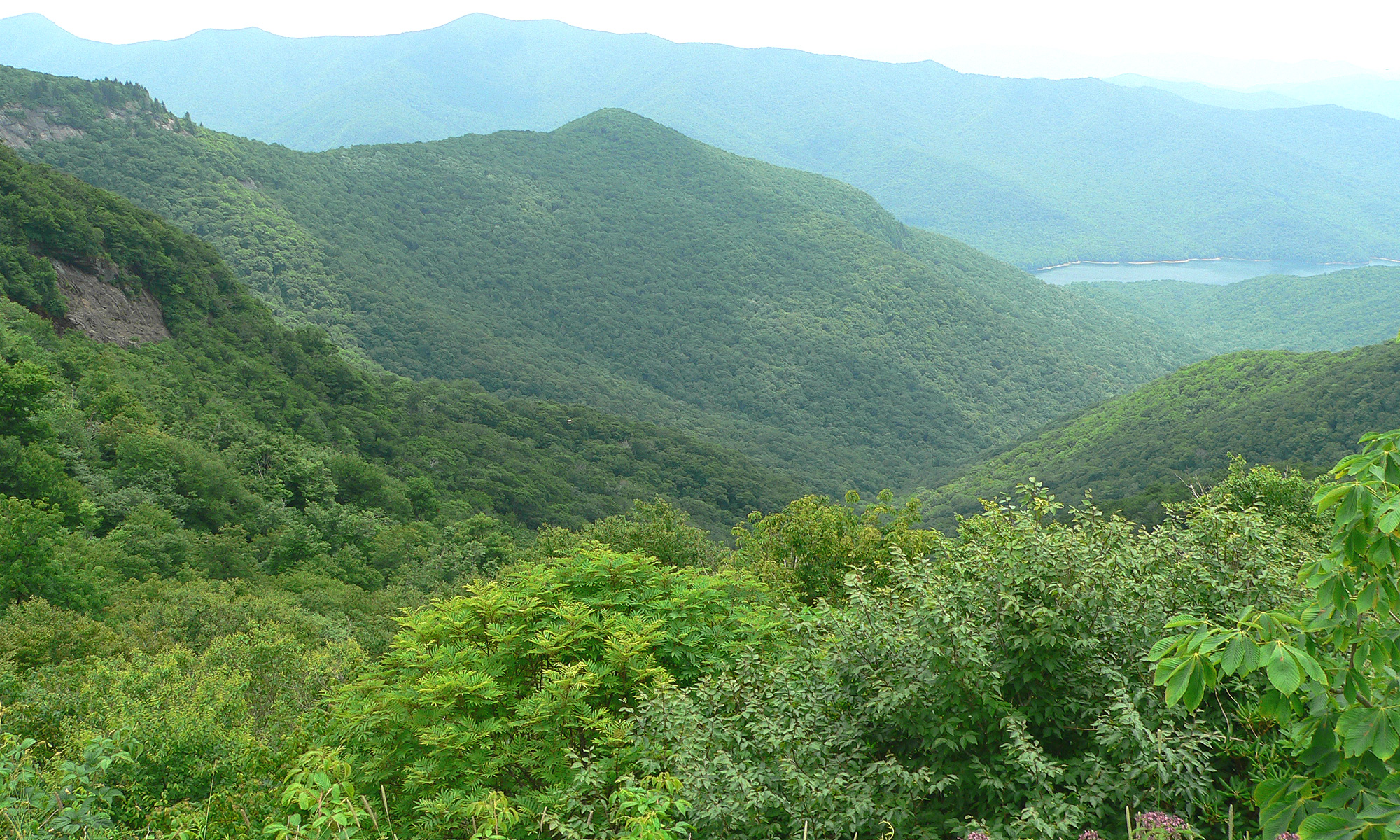 Appalachian Blue Ridge Forests Wikipedia
What type of soil does the blue ridge mountains have Apple orchards thrive in the far southern mountain ranges because of the warm moist climate plus apple trees are trees and the soil is just right for growing trees.

What type of soil does the blue ridge mountains have. Because the basement rock of the region is composed of hard igneous and metamorphic rock that is resistant to weathering in addition to the steep slopes and frequent rainfall soils do not have the opportunity to build up over time in the Blue Ridge Mountain region. Forested regions contain thick layers of nutrient rich soil created from regular patterns of decomposition. The blue ridge mountains have loamy soil made of clay silt and sand.
The Shawngunk Formation This combination of depositional features means that the source area was relatively close and deposited in a moist climate. For the past 100 million years erosion has carved away much of Georgias mountains leaving only their cores standing. Plant and animal communities can change dramatically depending on the direction a particular ridge is facing the elevation soil type and exposure to the elements.
Additionally over 30 mountain peaks are higher than 6000 feet. Because clay is the smallest type of soil particle Piedmont soil holds added nutrients and moisture well but easily becomes dense compacted and poorly draining. The rocks that formed this mountain range are many millions of years old.
The soils of the Blue Ridge Mountain region are a product of their geologic history and weathering processes. Geologic resources of the Blue Ridge include copper gold marble talc. They are among the most biologically diverse ecosystems in the country.
The Blue Ridge Mountains has forests with a variety of animal and plants including grass stunted oak and hemlock wild turkey bears and. The soil is loamy a mixture of clay silt and sand. Types of Soil.
Lands that were disturbed in the past are reverting back to healthy natural systems providing animals and plants with habitats that are increasingly uncommon on neighboring lands. The eastern edge of the Blue Ridge is consistently more rugged and steep than the western edge due to the direction of uplift during the creation of the mountains. The different rock types are granite gneiss and limestone.
Naturally low in fertility the soil reflects centuries of Blue Ridge erosion that settled in the plateau below. It contains sand silt and clay which are sediments that have eroded away. Cove forests occur in coves and on low north- and east-facing slopes in the southern Blue Ridge and central Appalachian Mountains.
The Blue Ridge Mountains has the biggest mountains in Georgia.
What type of soil does the blue ridge mountains have The Blue Ridge Mountains has the biggest mountains in Georgia.
What type of soil does the blue ridge mountains have. Cove forests occur in coves and on low north- and east-facing slopes in the southern Blue Ridge and central Appalachian Mountains. It contains sand silt and clay which are sediments that have eroded away. Naturally low in fertility the soil reflects centuries of Blue Ridge erosion that settled in the plateau below. The different rock types are granite gneiss and limestone. The eastern edge of the Blue Ridge is consistently more rugged and steep than the western edge due to the direction of uplift during the creation of the mountains. Lands that were disturbed in the past are reverting back to healthy natural systems providing animals and plants with habitats that are increasingly uncommon on neighboring lands. Types of Soil. The soil is loamy a mixture of clay silt and sand. The Blue Ridge Mountains has forests with a variety of animal and plants including grass stunted oak and hemlock wild turkey bears and. They are among the most biologically diverse ecosystems in the country. Geologic resources of the Blue Ridge include copper gold marble talc.
The soils of the Blue Ridge Mountain region are a product of their geologic history and weathering processes. The rocks that formed this mountain range are many millions of years old. What type of soil does the blue ridge mountains have Because clay is the smallest type of soil particle Piedmont soil holds added nutrients and moisture well but easily becomes dense compacted and poorly draining. Additionally over 30 mountain peaks are higher than 6000 feet. Plant and animal communities can change dramatically depending on the direction a particular ridge is facing the elevation soil type and exposure to the elements. For the past 100 million years erosion has carved away much of Georgias mountains leaving only their cores standing. The Shawngunk Formation This combination of depositional features means that the source area was relatively close and deposited in a moist climate. The blue ridge mountains have loamy soil made of clay silt and sand. Forested regions contain thick layers of nutrient rich soil created from regular patterns of decomposition. Because the basement rock of the region is composed of hard igneous and metamorphic rock that is resistant to weathering in addition to the steep slopes and frequent rainfall soils do not have the opportunity to build up over time in the Blue Ridge Mountain region.
Indeed recently is being hunted by consumers around us, maybe one of you personally. Individuals now are accustomed to using the net in gadgets to see video and image data for inspiration, and according to the title of the post I will discuss about What Type Of Soil Does The Blue Ridge Mountains Have.
What type of soil does the blue ridge mountains have. The Blue Ridge Mountains has the biggest mountains in Georgia. The Blue Ridge Mountains has the biggest mountains in Georgia.
If you are searching for What Type Of Soil Does The Blue Ridge Mountains Have you've arrived at the ideal location. We have 51 graphics about what type of soil does the blue ridge mountains have adding images, photos, pictures, backgrounds, and much more. In such web page, we additionally provide variety of graphics out there. Such as png, jpg, animated gifs, pic art, symbol, blackandwhite, translucent, etc.