27++ How To Find The Complex Zeros Of A Polynomial Function Ideas in 2022
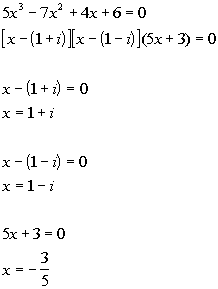
How to find the complex zeros of a polynomial function. One method is to use synthetic division with which we can test possible polynomial function zeros found with the rational roots theorem. Real zeros to a. It guarantees the existence of at least one zero but provides no algorithm to use for finding it. To find the other two zeros we can divide the original polynomial by either with long division or with synthetic division. For these cases we first equate the polynomial function with zero and form an equation. Also in the actual application of Rouchés theorem youll rarely need to use anything more complicated than the triangle inequality to establish the required inequality. The problem tells us nothing about any zeros or factors so we will have to find them on our own. Find all complex zeros of the polynomial function - YouTube. The polynomial equation is 1x3 - 8x2 25x - 26 0. X_0 2 x_1 32i x_2 3-2i The rational root theorem tells us that rational roots to a polynomial equation with integer coefficients can be written in the form pq where p is a factor of the constant term and q is a factor of the leading coefficient. Subtract the first from the second and youre done. Now that we can find rational zeros for a polynomial function we will look at a theorem that discusses the number of complex zeros of a polynomial function.
Find all complex zeros of the polynomial function. A non-constant polynomial with real or complex coefficients will have at least one real or complex zero. The function has 1 real. Use the Fundamental Theorem of Algebra to find complex zeros of a polynomial function. How to find the complex zeros of a polynomial function This theorem is an example of an existence theorem in mathematics. Now equating the function with zero we get 2x10. Depending on how you argue you may have to check that there are no zeros with z1 or z2. Polynomials can have real zeros or complex zeros. The roots of an equation are the roots of a function. Once we have done this we can use synthetic division repeatedly to determine all of the zeros of a polynomial function. Write f in factored form. You can put this solution on YOUR website. Look at the number of zeros with z.
How to find the complex zeros of a polynomial function This gives us the second factor of.

How to find the complex zeros of a polynomial function. By signing up youll get thousands of step-by-step solutions to your homework. The Fundamental Theorem of Algebra tells us that every polynomial function has at least one complex zero. Once we have done this we can use synthetic division repeatedly to determine.
These are the possible rational zeros for the function. Fundamental Theorem of Algebra. Then find the number of zeros with z.
Since we know that one of the zeros of this polynomial is 3 we know that one of the factors is. There are three solutions. We can break this into simpler problems.
Find the complex zeros of the polynomial function. Both sub-problems should be simple applications of Rouche. One basic principle is that in order to apply Rouchés theorem you are never expected to count the number of zeros of any polynomial which you cannot solve explicitly.
Then we solve the equation. This theorem forms the foundation for solving polynomial equations. Use the complex zeros to write f in factored form.
The Rational Zero Theorem helps us to narrow down the list of possible rational zeros for a polynomial function. Answer by jsmallt93758 Show Source. Find all complex zeros of the given polynomial function.
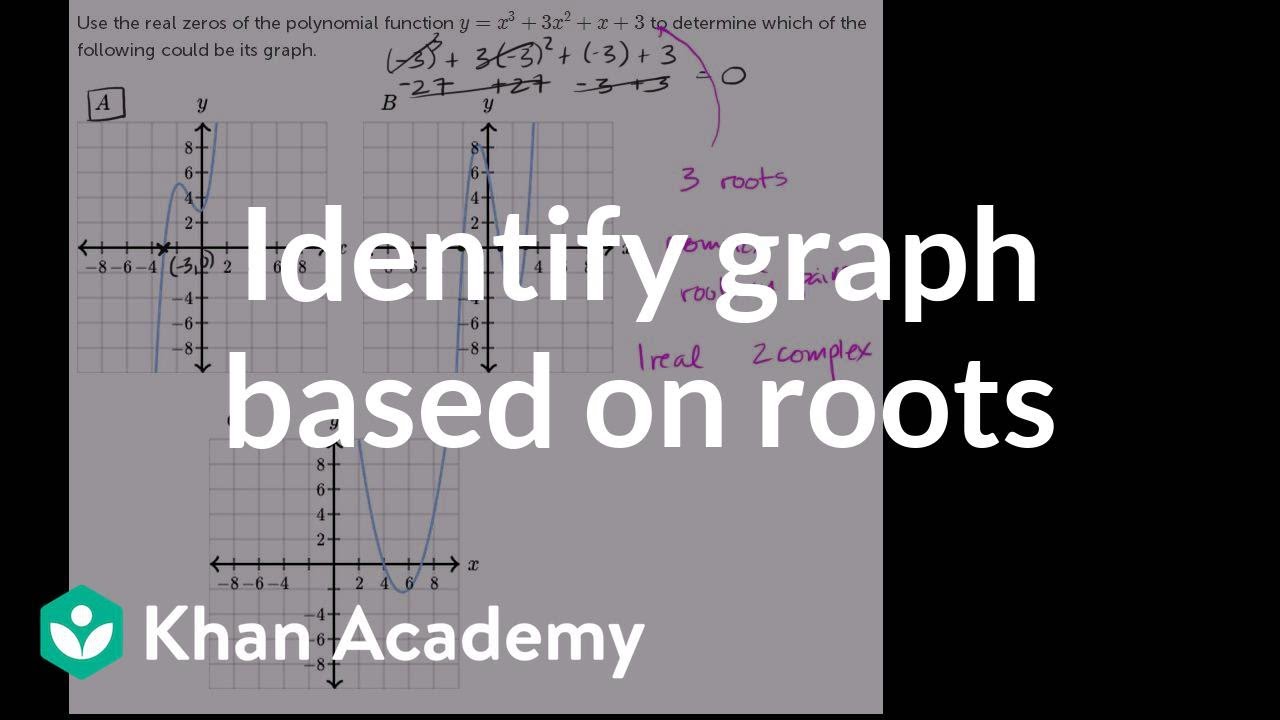
As we mentioned a moment ago the solutions or zeros of a polynomial are the values of x when the y -value equals zero. This video provides an example of how to find the zeros of a degree 3 polynomial function with the help of a graph of the function. Now suppose we have a polynomial.
The Fundamental Theorem of Algebra guarantees us at least one complex zero z_ 1 and as such the Factor Theorem guarantees that f x factors as f x left x - z_ 1 right q_ 1 x for a polynomial function q_ 1 of degree exactly n-1. The Rational Zero Theorem helps us to narrow down the list of possible rational zeros for a polynomial function. Suppose the given polynomial is fx2x1 and we have to find the zero of the polynomial.
The integer factors of the constant -26 are -26 -13-2. Once we find a zero we can partially factor the polynomial and then find the polynomial function zeros of a reduced polynomial.
How to find the complex zeros of a polynomial function Once we find a zero we can partially factor the polynomial and then find the polynomial function zeros of a reduced polynomial.
How to find the complex zeros of a polynomial function. The integer factors of the constant -26 are -26 -13-2. Suppose the given polynomial is fx2x1 and we have to find the zero of the polynomial. The Rational Zero Theorem helps us to narrow down the list of possible rational zeros for a polynomial function. The Fundamental Theorem of Algebra guarantees us at least one complex zero z_ 1 and as such the Factor Theorem guarantees that f x factors as f x left x - z_ 1 right q_ 1 x for a polynomial function q_ 1 of degree exactly n-1. Now suppose we have a polynomial. This video provides an example of how to find the zeros of a degree 3 polynomial function with the help of a graph of the function. As we mentioned a moment ago the solutions or zeros of a polynomial are the values of x when the y -value equals zero. Find all complex zeros of the given polynomial function. Answer by jsmallt93758 Show Source. The Rational Zero Theorem helps us to narrow down the list of possible rational zeros for a polynomial function. Use the complex zeros to write f in factored form.
This theorem forms the foundation for solving polynomial equations. Then we solve the equation. How to find the complex zeros of a polynomial function One basic principle is that in order to apply Rouchés theorem you are never expected to count the number of zeros of any polynomial which you cannot solve explicitly. Both sub-problems should be simple applications of Rouche. Find the complex zeros of the polynomial function. We can break this into simpler problems. There are three solutions. Since we know that one of the zeros of this polynomial is 3 we know that one of the factors is. Then find the number of zeros with z. Fundamental Theorem of Algebra. These are the possible rational zeros for the function.
Indeed recently is being hunted by consumers around us, perhaps one of you. People are now accustomed to using the internet in gadgets to view image and video data for inspiration, and according to the name of this post I will discuss about How To Find The Complex Zeros Of A Polynomial Function.
Once we have done this we can use synthetic division repeatedly to determine. The Fundamental Theorem of Algebra tells us that every polynomial function has at least one complex zero. By signing up youll get thousands of step-by-step solutions to your homework. How to find the complex zeros of a polynomial function .
How to find the complex zeros of a polynomial function
How to find the complex zeros of a polynomial function. The integer factors of the constant -26 are -26 -13-2. Once we find a zero we can partially factor the polynomial and then find the polynomial function zeros of a reduced polynomial. The integer factors of the constant -26 are -26 -13-2. Once we find a zero we can partially factor the polynomial and then find the polynomial function zeros of a reduced polynomial.
If you re searching for How To Find The Complex Zeros Of A Polynomial Function you've reached the perfect place. We have 51 graphics about how to find the complex zeros of a polynomial function adding pictures, pictures, photos, wallpapers, and more. In these web page, we additionally provide number of images out there. Such as png, jpg, animated gifs, pic art, logo, blackandwhite, transparent, etc.
 Wtamu Math Tutorials And Help